Selected work
Things we built, tested, and shipped.
A slice of the portfolio across mobile, embedded, and desktop.

EdTech · Web App
M1 Hero: The Mythic Academy
Thai-first M.1 entrance exam prep for grades 4–6 — 5 OBEC subjects, 8,000+ questions, gamified with Himmapan mythology and daily 15-minute sessions.
- 5 OBEC subjects with 8,000+ curriculum-aligned questions for P4–P6
- Gamified with Himmapan Magitech theme — quests, XP, ranks, and boss fights keep students coming back
- Parent dashboard shows daily progress without interrupting the child's session
Next.js 16TypeScriptSupabaseTailwind CSSFly.io
FinTech · AI · Web App
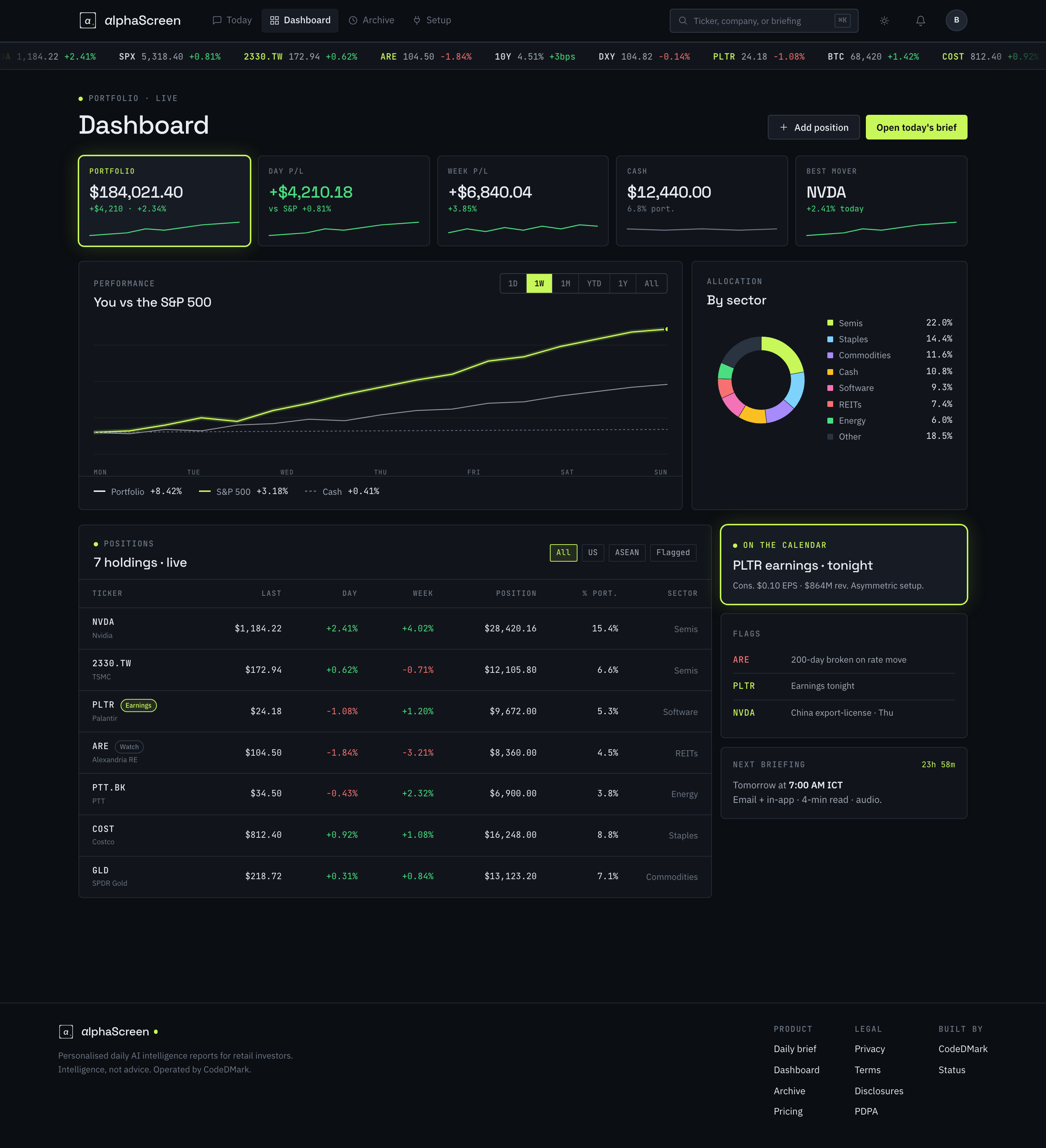
alphascreen
Personalised daily AI intelligence reports for retail investors — what moved overnight, what moved your positions specifically, and what's on the calendar this week.
- AI report grounded in live market data + your exact holdings — no hallucinated numbers
- Delivered by email every morning before the market opens, readable in under 5 minutes
- Dashboard shows portfolio P&L, performance vs S&P 500, and sector allocation live
Next.jsTypeScriptSupabaseClaude APIPolygon.ioResendFly.io
Mobile · Utilities
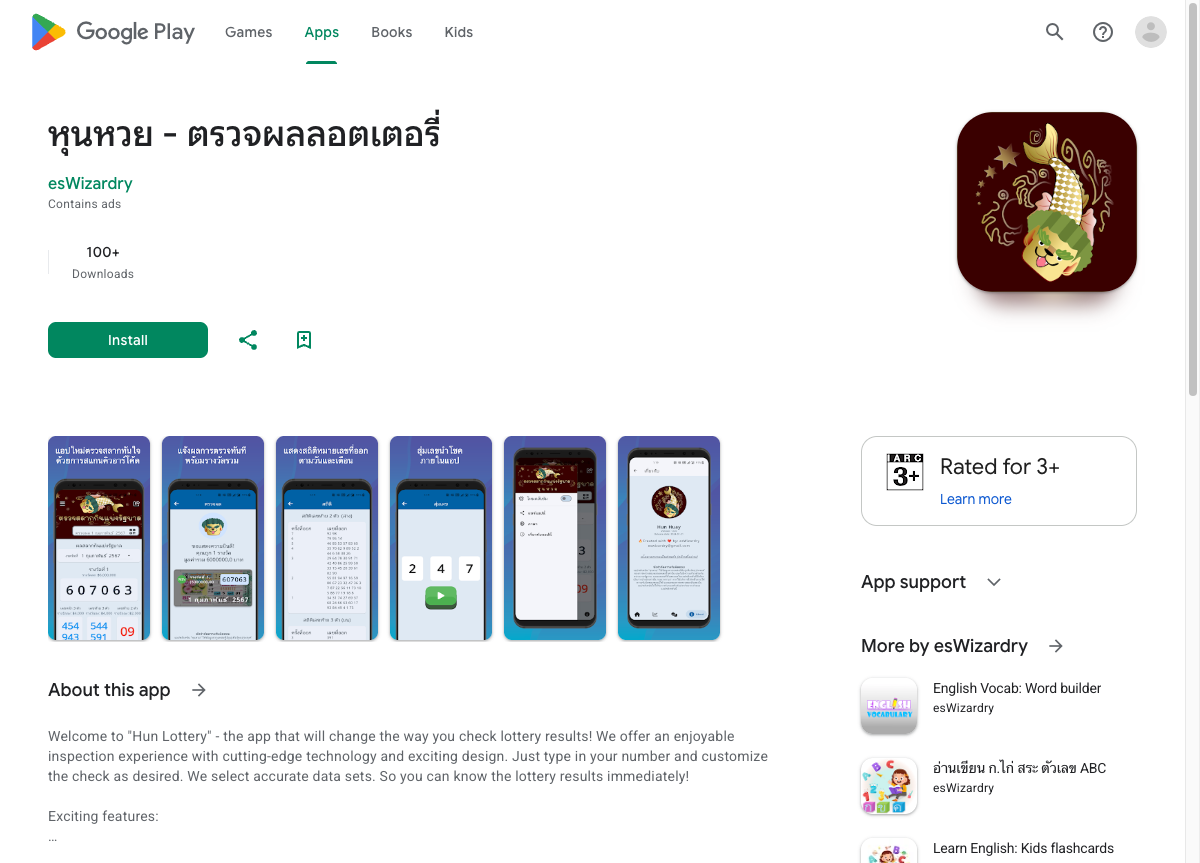
หุนหวย — ตรวจผลลอตเตอรี่
Check Thai lottery results instantly — scan your ticket or browse the full draw. Clean, fast, and works on every Android phone.
- Results published within minutes of the official GLO draw
- Ticket scanner using device camera — no number entry needed
- Works offline once results are cached from the last sync
FlutterDartGoPocketBaseFly.io
Mobile · Education
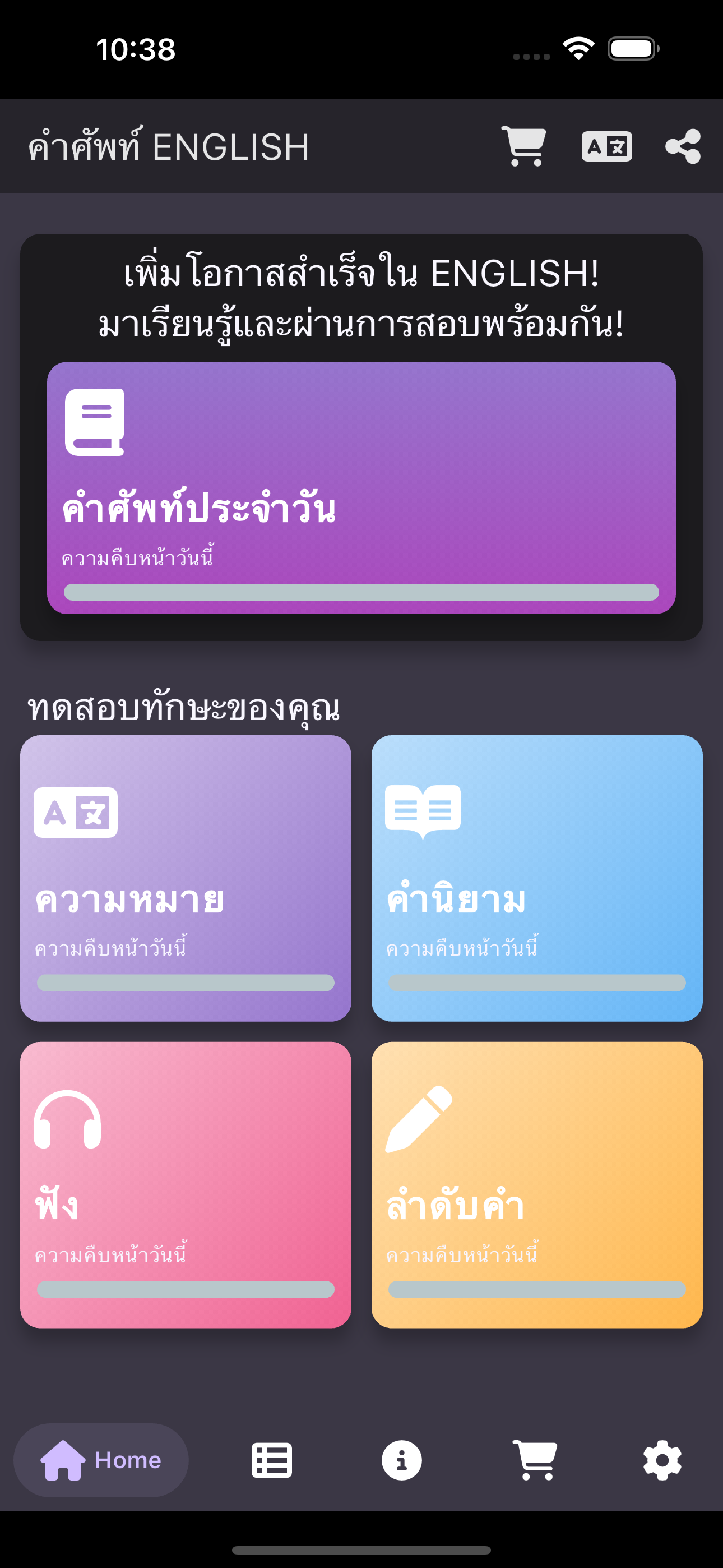
English Vocab: Word Builder
TOEIC and everyday English vocabulary for Thai learners — spaced-repetition flashcards, word categories, and progress tracking.
- 4.5-star rating on the App Store with consistent reviews on vocabulary retention
- Spaced-repetition engine adapts review intervals to each learner's pace
- Covers TOEIC, IELTS, and everyday categories — over 3,000 words total
FlutterDartSQLiteiOSAndroid
Mobile · Education · Kids
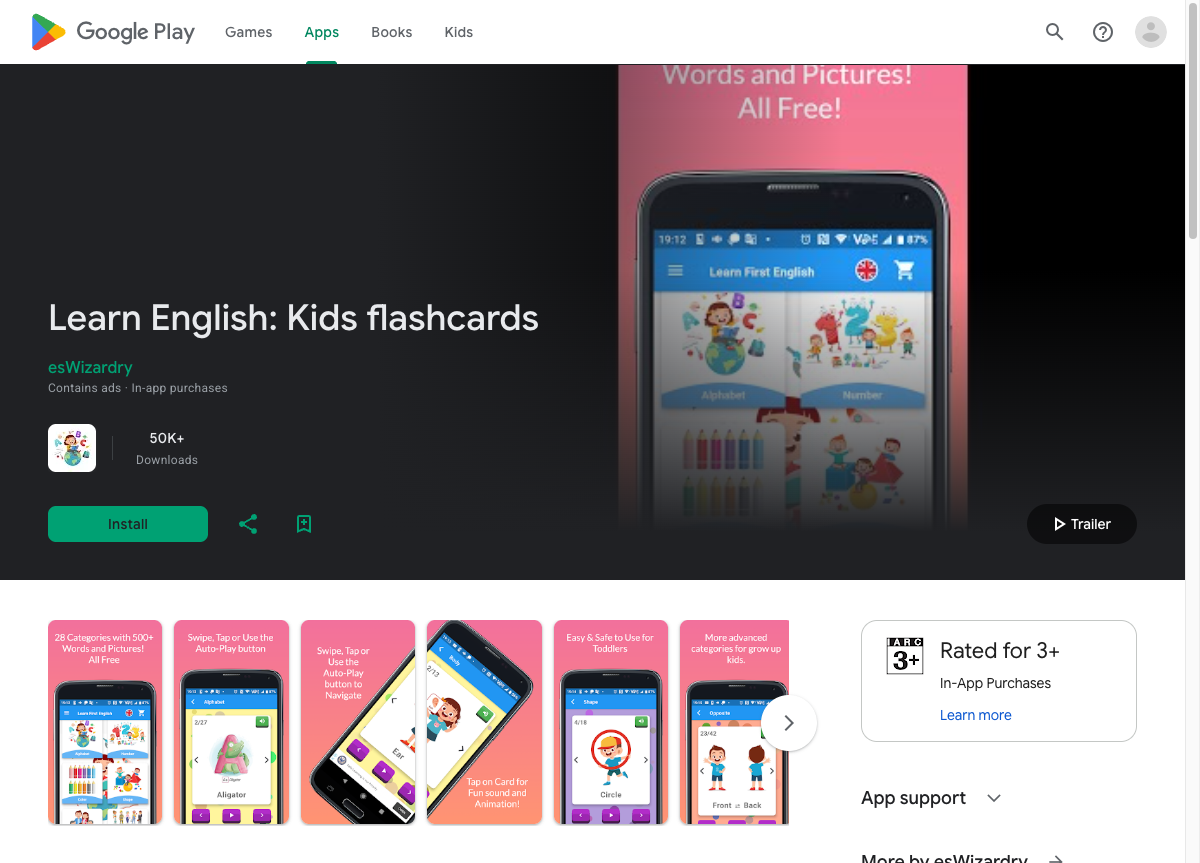
Learn English: Kids Flashcards
Early-literacy English flashcards for young Thai children — bright illustrations, audio pronunciation, and simple tracing activities.
- Designed for ages 3–7 — large touch targets, simple navigation, no text reading required
- Native English audio for every word — consistent pronunciation from day one
- Covers colours, animals, food, numbers, and everyday objects across 200+ words
FlutterDartiOSAndroid
Mobile · Education · Thai
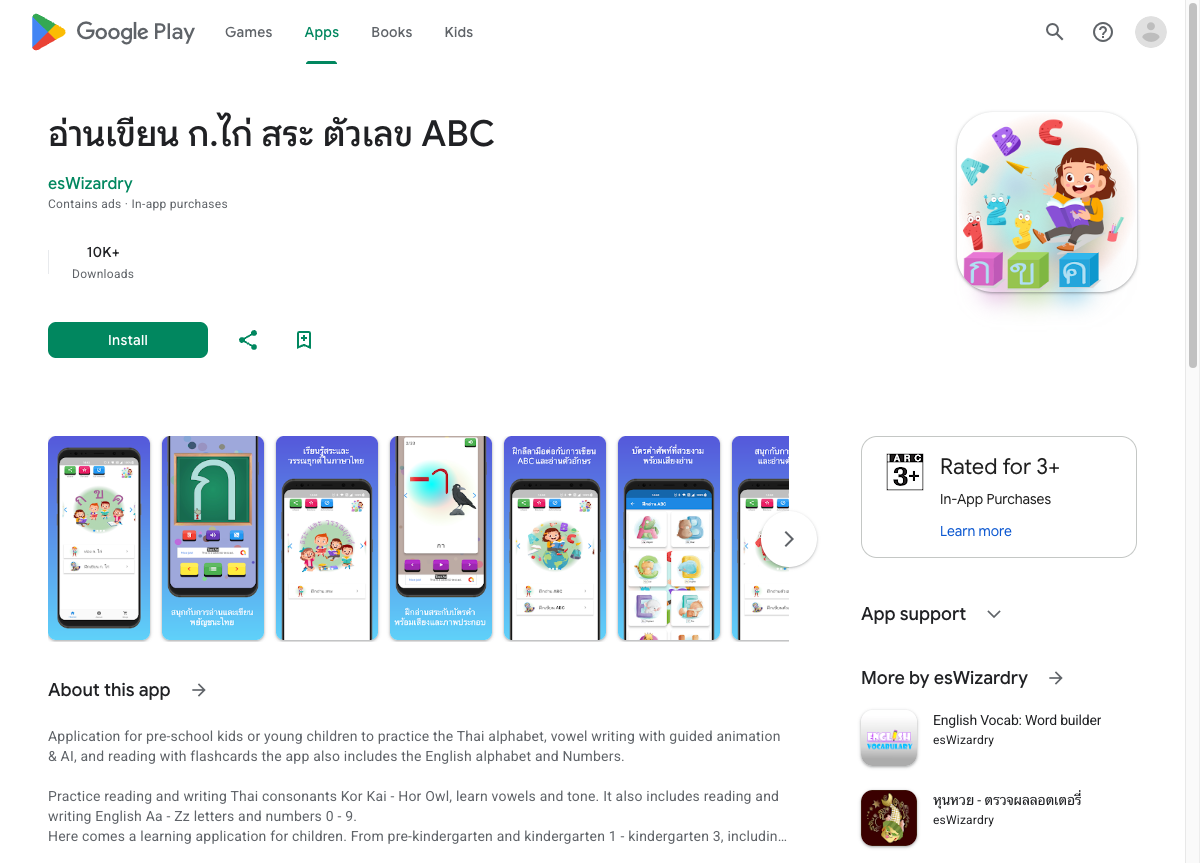
อ่านเขียน ก.ไก่ — Kids Edu Zone
Thai reading and writing for young learners — consonants (ก.ไก่), vowels, numbers, and A-B-C in one app, with tracing and matching games.
- Covers the full Thai consonant set (44 ก.ไก่), vowels, tone marks, and numbers 1–100
- Letter tracing with stroke-order guidance — builds correct handwriting habits early
- Matching and quiz games reinforce recognition without feeling like a test
FlutterDartiOSAndroid
Mobile · Utilities
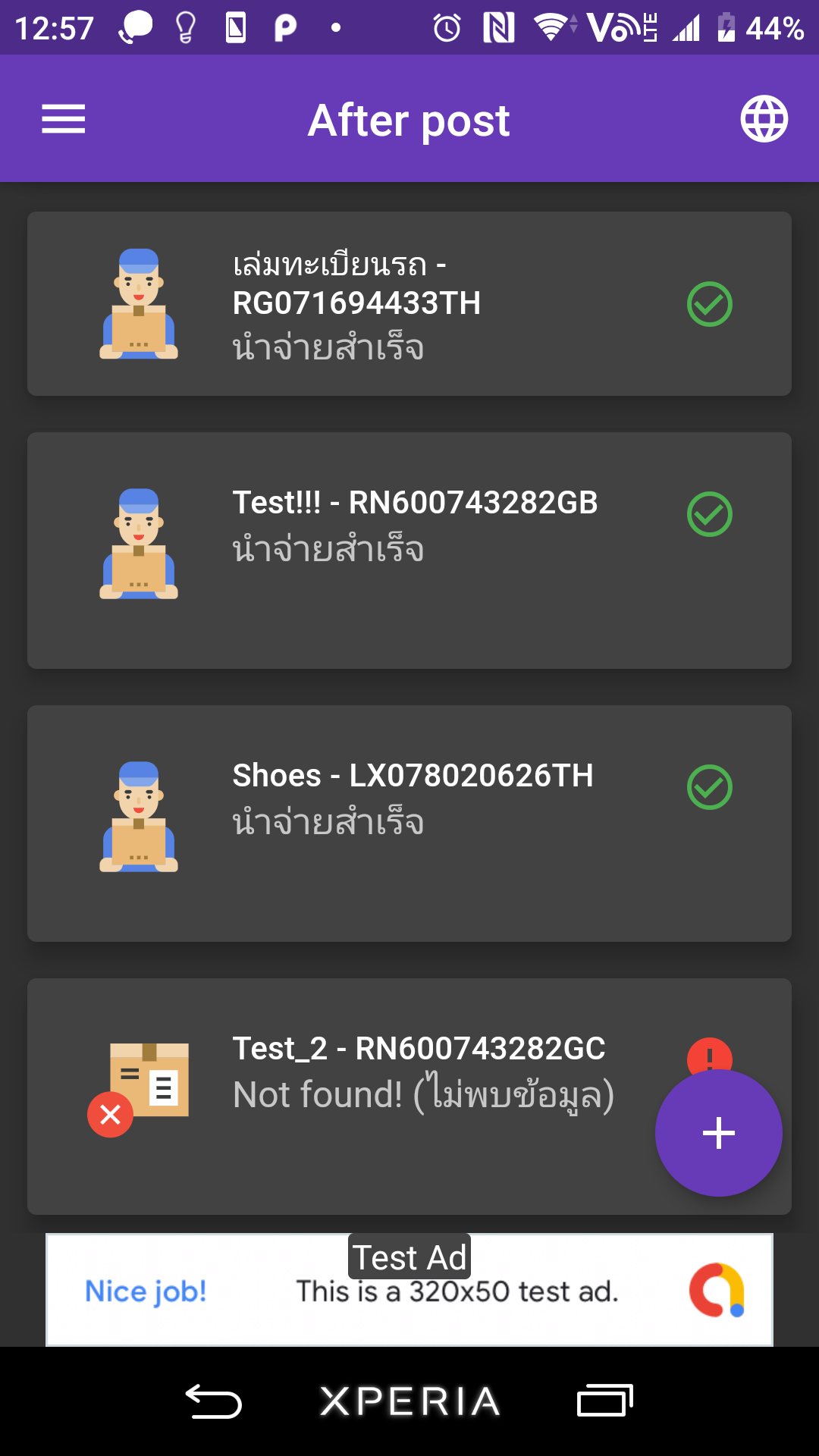
Parcel Tracking — ไปรษณีย์
Track Thailand Post parcels and registered mail instantly — paste a tracking number and see every scan event, from origin post to your door.
- Supports all Thailand Post service types: EMS, registered mail, parcels, and COD
- Push notifications when a parcel status changes — no manual refresh needed
- Tracking history saved on-device — past parcels retrievable without re-entering numbers
FlutterDartiOSAndroidFirebase
Mobile · Finance
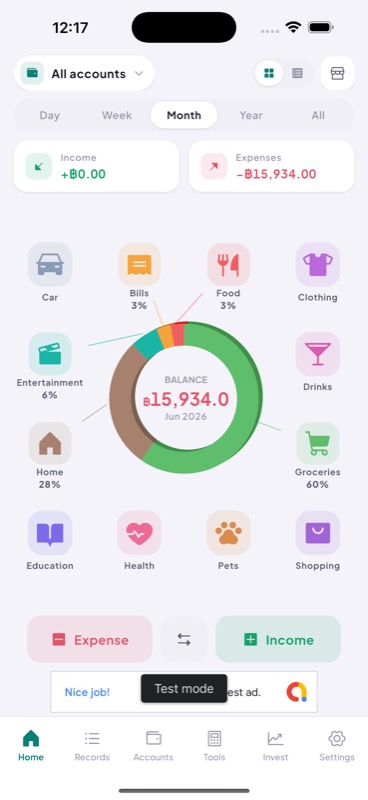
Tally — Personal Expense Manager
Log expenses in seconds — choose a category, enter the amount, done. Weekly and monthly summaries show exactly where the money went.
- Expense entry in under 3 taps — designed for the moment, not the end of the month
- Category budgets with visual progress bars — over-budget categories turn red
- Fully offline — no account, no subscription, no data sent anywhere
FlutterDartSQLiteiOSAndroid
~/fw $ codedmark build --target=stm32f4
› compiling firmware/… (142 files)
› text=48k data=2.1k bss=8.4k
› unit tests ……………… ✓ 84 passed
› flash /dev/ttyACM0 ✓ ok
build complete · marked good ✓
› compiling firmware/… (142 files)
› text=48k data=2.1k bss=8.4k
› unit tests ……………… ✓ 84 passed
› flash /dev/ttyACM0 ✓ ok
build complete · marked good ✓
Embedded · Capability
Wireless Sensor Nodes
Low-power firmware for wireless sensor nodes — a layered architecture, host-side unit tests, and CI that can flash real hardware. This is how we approach embedded work.
- Host-side unit tests with Ceedling/CMock — logic is verified before a board exists
- Thin HAL keeps drivers swappable and the protocol stack fully mockable
- Low-power design patterns: Stop mode between measurements, peripherals power-gated
CSTM32LoRaCeedlingCMockGitHub Actions
Desktop · Capability
Touchscreen HMI Panels
Qt/C++ touchscreen HMIs on fanless Linux SBCs — live telemetry, configurable alarms, and a fast cold boot that runs unattended. This is how we approach industrial UI work.
- Qt EGLFS on bare Linux — renders straight to the framebuffer, no desktop needed
- Unified driver layer so Modbus RTU (RS-485) and Modbus TCP look the same to the UI
- Watchdog + systemd auto-recovery patterns for unattended, long-running deployments
QtC++LinuxModbus RTUModbus TCPsystemd
Deploy ✓
Web · Static
Marketing & Docs Sites
Fast static sites and product docs built with Astro — component-driven, content in Markdown, auto-deployed on push. This site is the reference implementation.
- 95–100 Lighthouse score on performance, accessibility, and SEO — consistently
- Content authors update copy in Markdown — no CMS login, no build step on their end
- Sub-2-second TTFB from Thailand via GitHub Pages CDN, zero server to maintain
AstroTailwind CSSGitHub ActionsCloudflare DNSMarkdown